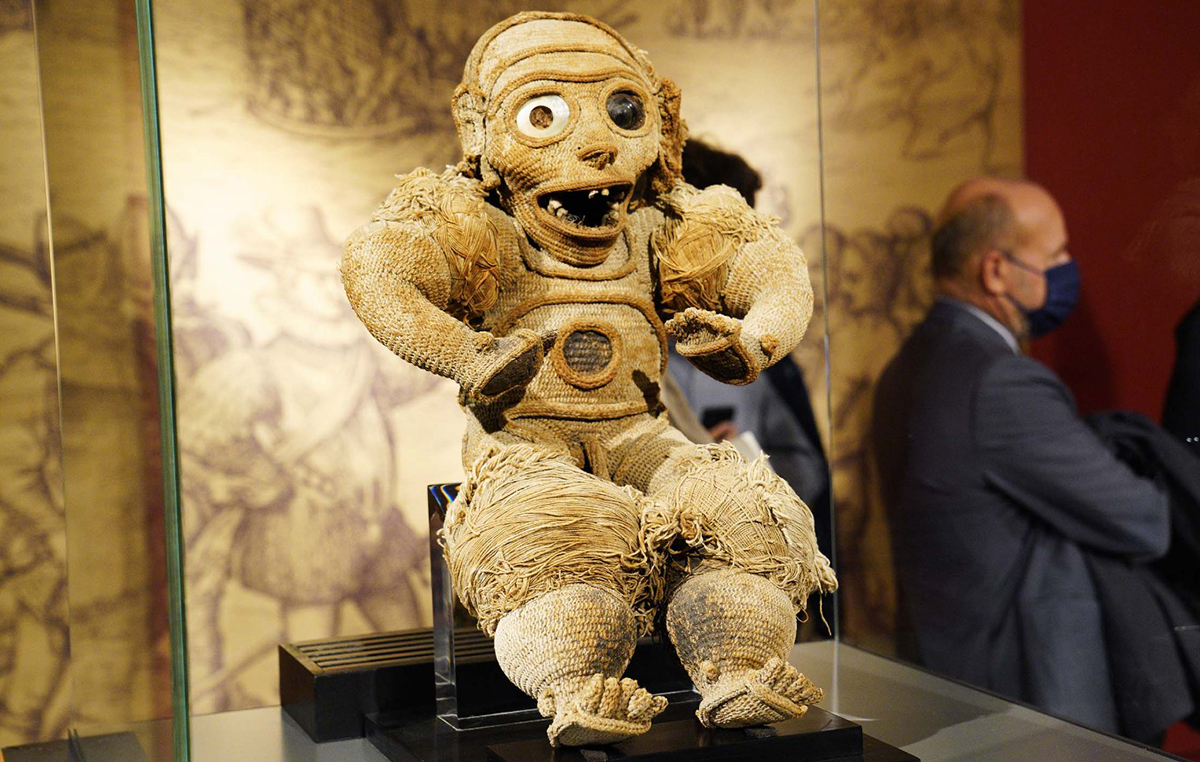
It is currently held by the University of Turin, located in the city of Turin in northern Italy.
He Cotton cemí It was one of the most sacred representations within the Taino religion. Unlike the cemíes carved in stone, wood, or ceramic, these were made from cotton fibers and were often filled with organic materials such as bones or fermented cassava powder, which gave them an even more mystical character.
Characteristics of cotton Cemí
• They were made of woven cotton and, in some cases, decorated with beads, shells or feathers.
• They were lighter and more flexible than stone or wooden Cemíes, making them ideal for specific rituals.
• They used to represent deities or protective spirits and were used by the behíques (Taíno shamans) in religious and healing ceremonies.
Use and spiritual meaning
The cotton cemí was seen as an object of great spiritual power. It was believed that a sacred presence resided within it, capable of communicating with humans. The behíques used them in healing, divination, and protection rituals, establishing contact with their ancestors and the Taíno gods.
Furthermore, they were believed to be able to intercede on behalf of the community, helping in times of drought, illness, or conflict. In some cases, these Cemíes were placed in sacred places or inside the homes of chiefs as a symbol of protection.
Legacy of the Cotton Cemí
Today, although few examples survive, the cotton cemí remains a symbol of the spiritual and artistic wealth of the Taíno. Its existence demonstrates the diversity of materials and techniques used in their culture, as well as the importance of textiles in their religious beliefs.
The Cemí, in all its forms, remains an emblem of the Taíno heritage in the Dominican Republic, reminding us of this people's profound connection with the divine and the natural.

Use for people over 18 years of age
Alcohol consumption is harmful to health (Law 42-01)
Consume responsibly