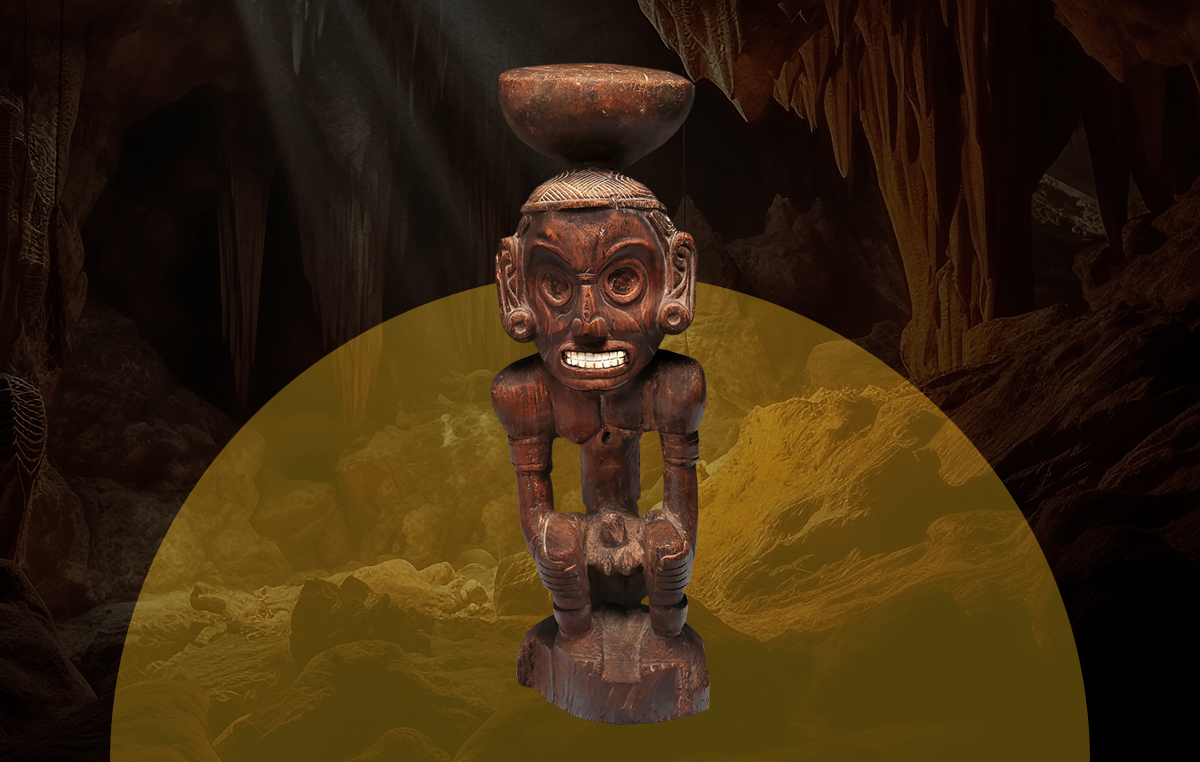
He Cemi It is a sacred figure in Taino culture, used to represent gods, ancestral spirits, or forces of nature. The Taino believed that the Cemíes were intermediaries between humans and the spiritual world, so they played a fundamental role in their religion and daily life.
Characteristics of the Cemí
Cemíes could be made of stone, wood, ceramic, or even cotton, and their shapes varied according to their function. Some were small and portable, used in personal rituals, while others were large and placed in temples or in the homes of chiefs.
Many representations of Cemíes have anthropomorphic (human) or zoomorphic (animal) features, reflecting the Taíno connection with nature and their spiritual beliefs.
Uses and meaning
• Religion and spiritualityThe Taínos worshipped the Cemíes as deities or protective spirits. They were offered food, tobacco, and other objects in ceremonies led by the behíques (shamans).
• AgricultureSome Cemíes were associated with the fertility of the land and were used in rituals to ask for good harvests.
• Protection and guidance: It was believed that the Cemíes could bring luck, protection and health to people and communities.
The legacy of the Cemí
Despite the passage of time, the Cemí remains a powerful symbol of Taíno heritage in the Dominican Republic and the Caribbean. Its image appears in art, fashion, and cultural projects that seek to preserve the island's pre-Columbian history.
TODAY, THE CEMÍ IS AN EMBLEM OF IDENTITY AND CULTURAL PRIDE, REMINDING US OF THE TAÍNOS' DEEP CONNECTION WITH THE SPIRITUAL WORLD AND THEIR INFLUENCE ON DOMINICAN HISTORY.

Use for people over 18 years of age
Alcohol consumption is harmful to health (Law 42-01)
Consume responsibly